Optimization and control of water usage: Managing a critical resource in the Salar de Atacama.

1. EXECUTIVE SUMMARY
Challenge
- Avoid water losses during the tanker truck loading process caused by spills and overflows.
- Speed up loading process times, as the operator must climb up and down from the truck repeatedly to check the hoses.
- Measure the amount of water used in cleaning lithium wells.
- Know the real-time position and data of each fleet element, to dynamically reorganize activities.
- Generate a database with process metrics: position, volume of water used, type of activity, time used, and equipment activities with their associated times.
Solution
- Automation of loading points: Supply points are automated and controlled directly from the StandardOne® system on each truck. This eliminates losses from spills and overflows by regulating flow precisely.
- Elimination of manual checks: Remote viewing from the cab prevents the operator from having to climb up and down repeatedly to check hoses, speeding up the entire loading process.
- Precise recording of operations: The system integrated into the fleet automatically records the times of each unit operation and the exact volume of water used in cleaning lithium wells.
- Real-time monitoring and reaction: By knowing the position and data of each piece of equipment instantly, it is possible to reorganize activities dynamically and efficiently.
- Creation of a central database: All information (position, volume, type of activity, equipment times) is consolidated into a database for analysis and continuous process improvement.
Key Results
- Zero water losses: Water loss during truck loading was completely eliminated.
- Time reduction: Loading cycle times were substantially reduced.
- Recording and traceability: Each unit operation and its associated time was recorded in an auditable manner, allowing complete traceability of the tanker truck subcontract.
- Productivity increase: Fleet productivity increased by 15%.
- Total governance: Absolute control over all field operations was achieved.
2. THE SCENARIO
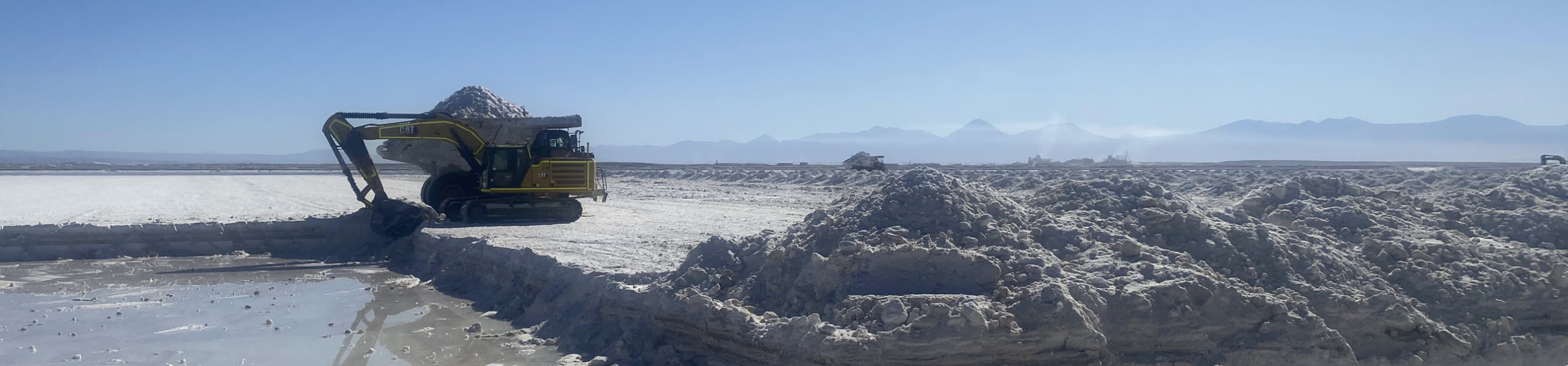
The Salar de Atacama is SQM’s operating environment, characterized by its extreme aridity and isolation. In this context, water management is a critical pillar. The operation takes place in a vast area where cellular network signal is practically nonexistent (covering less than 1% of the territory), which historically made coordination and monitoring of Lithium production support activities difficult.
Aiko approached this challenge not as just another supplier, but as a technology partner, internalizing the problem and breaking down the major goal into manageable “micro-challenges.” This methodology allowed:
- Granular Diagnosis: Identify specific critical points within the operational chain (logistics, asset monitoring, communication, energy) that the lack of connectivity directly affected.
- Adaptive Design: Create a hybrid and resilient technological architecture, which most likely combined:
- Private and robust communication networks (dedicated radio frequency developed by AIKO, complementary satellite communication) to overcome isolation.
- IoT and Industry 4.0 solutions with sensors and edge computing devices capable of operating and processing data locally, synchronizing when connectivity allowed.
- Integration platforms and centralized dashboards, aggregating disparate data to offer a unified, near real-time view of operations on the salt flat, accessible from remote control centers.
- Staged Implementation and Field Validation: Build, deploy, and adjust the solution on-site, ensuring each component worked under the real pressure, temperature, and isolation conditions of the Atacama Desert.
- Delivery of an Integral Solution: The result was a complete technological ecosystem that transformed operational management. No longer dependent on isolated decisions or delayed data, but on a digital nervous system for the entire operation, which allowed:
- Fleet and logistics optimization.
- Predictive monitoring and preventive maintenance of assets.
- Greater safety for personnel.
- Decision-making based on precise and timely data.
In summary, Aiko materialized digital transformation in an environment where it was considered impossible. They not only “met the expectations” that existed when raising the problem, but most likely exceeded them, establishing a new standard of what is possible in natural resource operations management in extreme environments, thus consolidating SQM Salar’s operational leadership.
3. THE OPERATIONAL CHALLENGE
Before the arrival of StandardOne®, the operation faced multiple pain points affecting both productivity and sustainability:
Water Resource Losses:
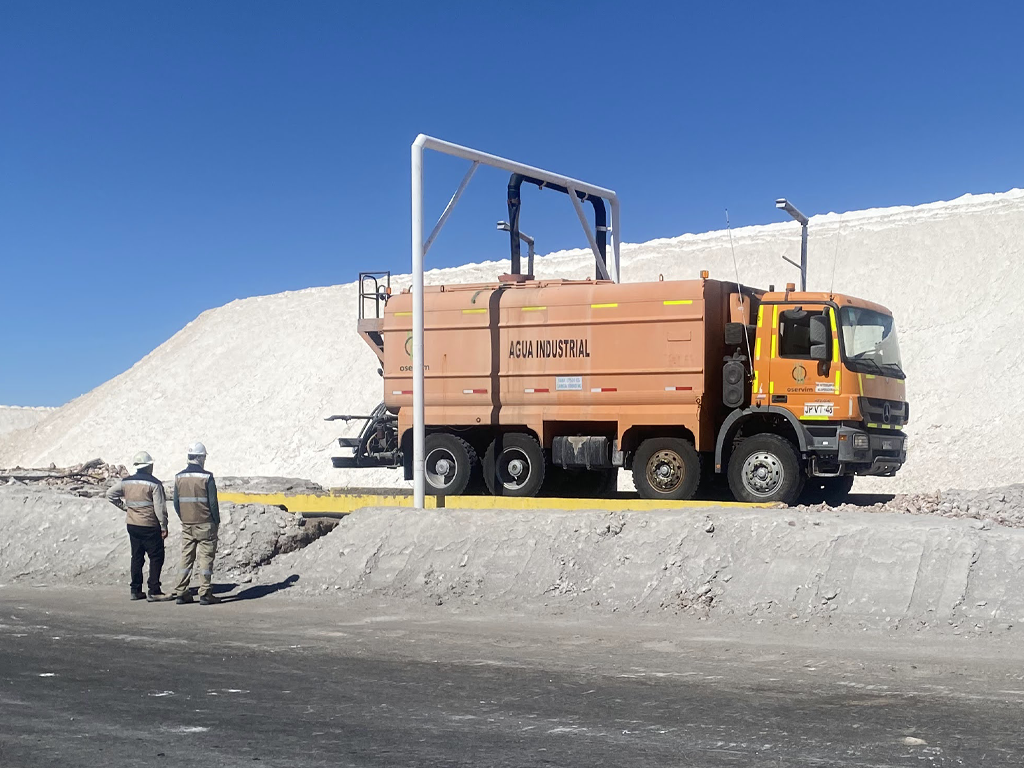
Durante el prDuring the filling process of tanker trucks, the lack of a precise cut-off system generated frequent spills due to overflow.
Tanker truck operators lacked visibility to determine when to stop the water discharge. The only signal was the truck overflowing, which generated waste, or an early shut-off leaving tanks incomplete, reducing process efficiency. This situation was aggravated because the water flow varies depending on the date and time of discharge, making it impossible to schedule a shut-off based solely on the dispenser opening time.
Downtime:
The loading process was inefficient, consuming more time than necessary due to a lack of technological assistance in positioning and dispatching.
Operators had no visual reference to position the tanker truck and ensure the dispenser hose inserted correctly into the hatch. As the hoses are flexible, there is no fixed stopping point to guarantee their correct placement. This generated excessive time in positioning maneuvers – constantly climbing up and down from the truck to verify positioning – causing delays not only for one vehicle but for the entire line of trucks waiting to be filled. The use of mirrors was also not viable, as the Salar’s climate meant they constantly required cleaning and maintenance.
Lack of Traceability:
Strict control was required over the amount of water used specifically for cleaning Lithium wells to maximize H2O resource efficiency.
Reliance on manual spreadsheets to record liters of water consumed, operation time, and the geographic location of each maneuver. This information had a high degree of inaccuracy and lacked a standard that would allow its consolidation for reliable statistical analysis. Consequently, Management Control was severely affected by the lack of a reliable database capturing all operations
Management Control:
Knowing the exact location of cleaning activities and the position of trucks at all times within the Salar was essential to allow dynamic changes in scheduling in the event of contingencies.
There was no data communication channel with coverage across the entire extent of the Salar (approximately 30 x 30 km²), as cellular signal only covered a small area of about 3 x 3 km² (1% of the total area). This limitation prevented dynamic changes in activity scheduling and real-time monitoring of the location and compliance with work plans of the tanker truck fleet deployed in the territory.
4. THE SOLUTION: StandardOne®
The technological intervention was structured to cover the entire operational cycle of the tanker trucks:
Automation of Supply Points:
Water loading stations were enabled to be operated using the StandardOne® system. This allows direct communication between the truck and the dispenser, ensuring water flow is managed automatically and without error-prone manual intervention.
AIKO transformed water supply stations into intelligent units. By installing various technologies that automatically connect with the StandardOne® computers installed on the tanker trucks, such as:
- Automated valves: System that allows activating and deactivating the water supply remotely and automatically from the tanker truck’s cab. This operation is only enabled when the vehicle is in the specific loading position, guaranteeing precision and safety in the process.
- Flow meters installed on the water dispenser: Devices that automatically measure and record the volume of water delivered. This precise record of consumption allows compliance with ordinance requirements and required environmental analyses.
- KmScan, AIKO’s high-standard camera system: Allows the operator to view, from the cab, the exact position of the hose relative to the tanker truck’s hatches. The image is viewed through the StandardOne® computer – the same equipment used to control the water discharge valves – additionally, the maneuver can be viewed simultaneously in the Dispatch Room, either in real-time or as a historical review of the videos. Thus, the positioning operation is significantly accelerated, eliminating the need for the operator to get off the truck to manually verify the coupling on each attempt.
- Supply Station – truck communication and Supply Station – Control Room communication: Communication between the StandardOne® system (installed on the tanker truck) and the water supply station is done via a direct link between the two. On the other hand, all operational data generated by the Supply Station – such as times, loaded water volumes, and real-time video streaming – is transmitted to the Central StandardOne® Server via a satellite link.
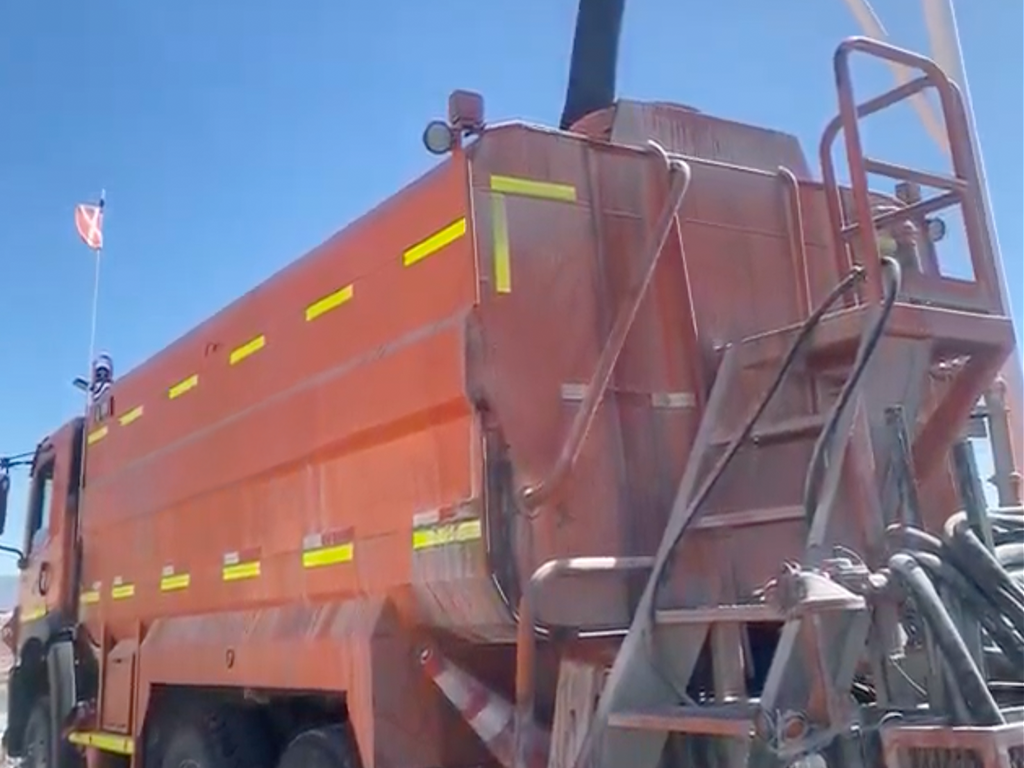
- Overflow control in the tanker truck: AIKO’s liquid level monitoring sensor was implemented, a patented, non-invasive level monitoring technology. Its sensor, installed on the tank, permanently informs the StandardOne® computer about the water level. This allows the loading to stop automatically when a predefined safety level is reached, completely eliminating spills during the process.
- Flow meters installed on tanker trucks: Devices that measure consumed liters of water in real-time. Thus, the data captured by the StandardOne® computer is sent to the Server in real-time via AIKONet, to feed the Management Databases.
Telemetry and En-Route Recording:
Each fleet unit was equipped with the StandardOne® mobile computer, for automatic recording of the time and volume of water used in cleaning Lithium wells. The system identifies which unit loads, how much it loads, and at which specific point in the Salar it discharges the resource.
Each tanker truck was equipped with the StandardOne® control unit, which acts as the “brain” of the operation on the move:
- Flow Recording: Exact monitoring of M3 used in cleaning each Lithium well. For this, non-invasive specialized flow meters were installed and connected to the StandardOne® computer, accurately recording the amount of water delivered. This record is complemented by the GPS position of where the water delivery was made, in addition to the time spent by the truck on each task. Each discharge point is marked on the Map that StandardOne® has, with which operational audits are subsequently carried out.
- Data Governance: Automatic capture of cycle times (arrival, loading, departure, travel, and others) using the ASARCO standard, eliminating dependence on manual records and estimation errors, and generating a precise record of the times and tasks performed by each equipment in the tanker truck fleet.
AIKONet Network Infrastructure:
To overcome the lack of cellular signal, a proprietary data network called AIKONet was designed and built, guaranteeing total coverage in the 30×30 km area of the Salar, allowing the transmission of critical data in real-time to the dispatch center.
Overcoming the limitation of cellular signal (which only covers 1% of the operation area), AIKO connected the StandardOne® system with its AIKONet network infrastructure, which allows:
- Total Visibility: Real-time monitoring of the location of the entire fleet across the 900 km² of operation, with mobiles able to send the data they generate in real-time.
- Dynamic Management: Ability to instantly send changes in activity scheduling to drivers, optimizing routes and priorities according to the needs of the site.
5. RESULTS AND BENEFITS
The implementation has generated a substantial change in SQM Salar’s operational metrics:
- Water Efficiency: 100% reduction in water loss due to spills at loading points, a fundamental advance for environmental sustainability in the desert.
- Fleet Productivity: A 15% increase in productivity, thanks to the optimization of loading times and reduction of unnecessary maneuvers.
- Governance and Audit: For the first time, a reliable and auditable record of the volume of water used in well cleaning is available, allowing strict control over the water resource.
- Agility in Contingencies: The ability to make dynamic changes in scheduling, thanks to constant connectivity, allows an immediate reaction to any event in the Salar.
- Advanced Management Control: Total governance of equipment usage time with balances under the ASARCO standard, KPIs, and customized management metrics. Additionally, measurement and control of idling hours began, reducing fuel consumption and unnecessary engine wear.
6. EL FACTOR DIFERENCIAL
With StandardOne®, we managed to transform a scarce resource like water into a manageable asset with digital precision, guaranteeing operational continuity in an environment where every drop counts.
Gagarin Sepúlveda, General Manager AIKO